
School History
At A Glance…
- 1866 – Methodist College was founded by Ms. Catherine Scott.
- 1874 – Boarding services were started.
- 1915 – The school was recognised as a fully organised Secondary School and its name was changed from ‘Kollupitiya Girls’ High School’ to ‘Methodist College’.
- 1917 – The 1st Colombo Guide Company was started by Ms. Shire & Ms. Choate.
- 1919 – The Old Girls’ Association (OGA) was formed, the Methodist College Magazine was begun.
- 1922 – The new hostel was opened.
- 1930 – The School House System with 4 houses – Scott, Choate, Restarick and Rigby – was introduced by Ms. Helen Park.
- 1940 – The Methodist College Parent-Teacher Association (PTA) was formed.
- 1942 – School closed in February due to war conditions, but reopened in May with limited students and accommodation.
- 1950 – Methodist College entered the Free Scheme and became an assisted school, Framjee House was purchased.
- 1952 – Two more houses were inaugurated to the House System: Shire & Park.
- 1957 – The new building was declared open by Mrs. L. G. Loos, the Principal’s former bungalow was renovated for school use and named the Restarick Bungalow.
- 1858 – Park Hall was built.
- 1959 – A new classroom block was declared open at Framjee House.
- 1966 – The Centenary Year.
- 1977 – New block of classrooms opened by Mr. V. S. Nadarajah, Foundation Stone for the new College Hall laid by Principal, Mrs. Shanthi Pieris.
- 1978 – Methodist College won the Inter-School (Girls) Shakespeare Drama Contest.
- 1985 – The Prize Giving was held in the Auditorium, even though it was still incomplete. A counselling service to strengthen students’ mental and emotional well being was begun.
- 1988 – The Auditorium was formally opened by Rev. Harold Fernando, Foundation Stone laid for a new 4-storeyed block of classrooms.
- 1989 – School closed due to civil disturbance from July to September.
- 1991 – 125th Anniversary celebrations.
- 1998 – Completion of the refurbishment of Framjee House by architect Channa Daswatte.
- 2002 – A computer literacy program was begun for students from Grade 6-9.
- 2007 – The construction of the Fernando Block was overseen by Mrs. Shanthi Dias and declared open by Mrs. Priyani Fernando.
- 2008 – A school bus was donated by the batch of 1990.
- 2014 – Methodist College became a fully private school.
- 2015 – The Advanced Level Edexcel Programme began.
- 2016 – School celebrated her 150th Anniversary, a second verse was added to the School Song for the 150th Anniversary.
- 2019 – School closed briefly from April onwards due to the Easter Bombings.
- 2020 – School closed from March onwards due to the COVID-19 pandemic, learning was moved online.
- 2022 – Refurbishment and rededication of Auditorium.
- 2023 – Primary School Washroom refurbishment took place.
- 2025 – ‘MC Shines’ School Walk and Fun Fair was held.
From Humble Beginnings
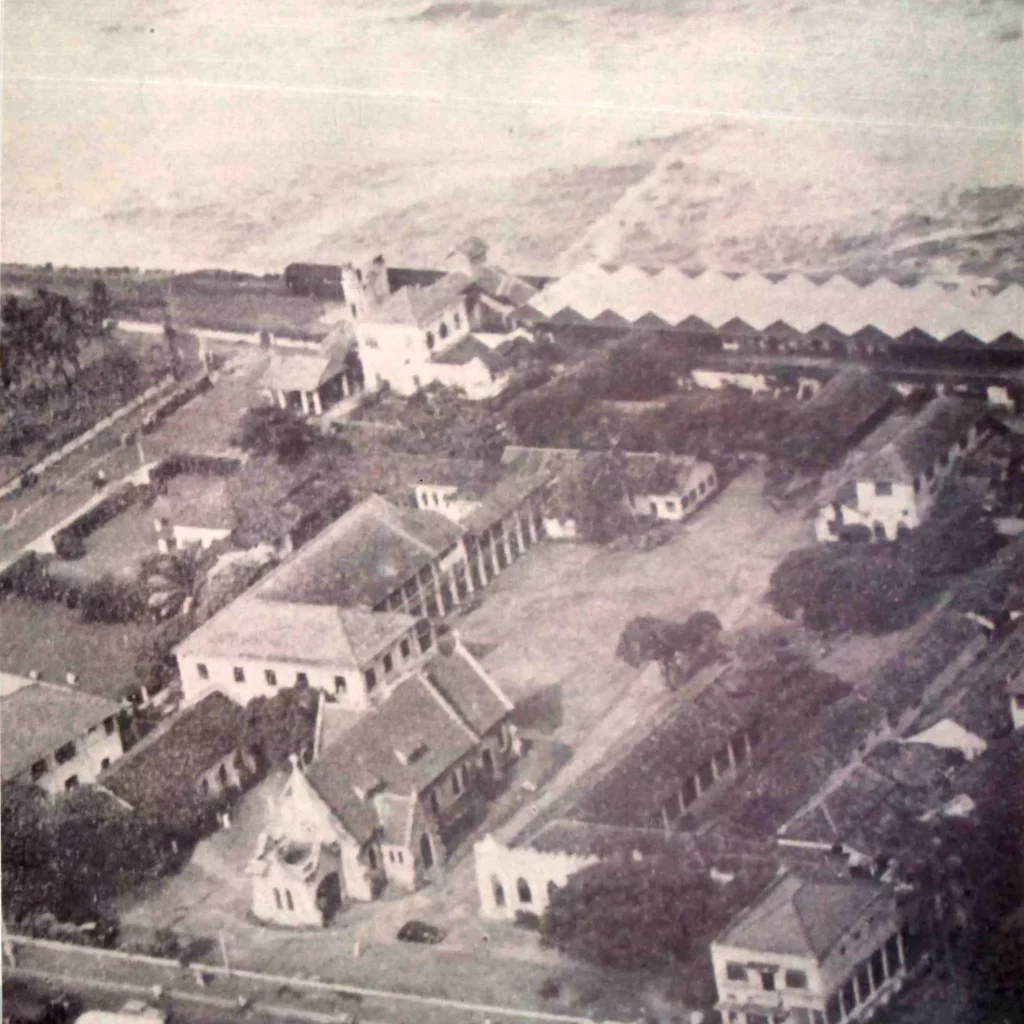
Kollupitiya, over a hundred and fifty years ago, was not the residential area it is today, with broad tree-lined avenues and the wide Galle Road running along the sea front. Kollupitiya was a village with narrow tracks, cinnamon gardens and a sparse population. It had a market place with bullock carts, horse-drawn carriages and rickshaws on its roads. One of the few things it still has in common with that past era, is the Indian Ocean, which lashes the shore behind Methodist College.
What is now one of the leading Secondary Collegiate schools for girls in the country, once began in the heart of this little village, when the Methodist Mission started a Sinhala School in the early part of the 19th Century.
In 1866 a devout Missionary, Ms. Catherine Scott, came out to Ceylon and started the Kollupitiya Girls’ English School in a large room on this same spot with merely forty girls. As a school, it was then as unimpressive as any village school in a remote area. The large room was divided into three sections – two for the Sinhala and English classes and the third for the persevering Methodist Missionary, busy learning Sinhala from a pundit. There were no beautiful classrooms with educational aids and apparatus… not even desks and chairs! The girls sat on benches along the walls, wrote on slates and made valiant efforts to master the “three Rs” and the intricacies of English spelling from the now unknown book called “Carpenter’s Spelling”. They were of course taught religion, and in 1874 a boarding school was added.
To Greater Heights!
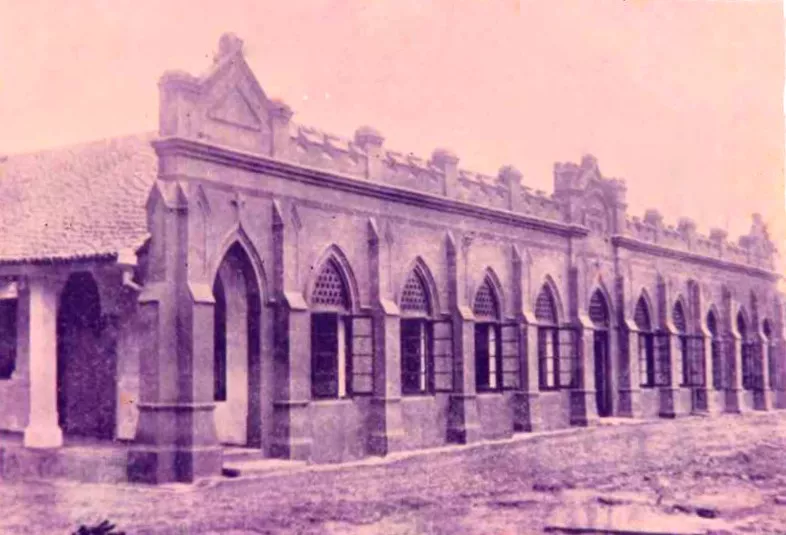
By the time Ms. Scott left in 1883, the school was registered as a ‘Grant-in-aid’ English High School with 99 pupils and renamed Kollupitiya Girls High School. With the same determination of spirit which enabled her to last 17 years in this country, she laid the foundation for this most Christian and outstanding of educational institutions. This then was the beginning of Methodist College, Colombo, which now has a manageable student body of 1500+. From these meagre beginnings, the school has blossomed into an outstanding, multi-ethnic, multi-religious educational institution.
By the time Ms. Male became principal in 1886, the numbers had increased to 150 and could no longer be accommodated in the old building. It was due to Ms. Male’s tireless efforts that a new school hall was built – the foundation stone was laid by Lady Havelock in 1890 and the hall was opened by Sir Noel Walker in 1891. This new hall was used to house the growing student population.
It would be of special interest to note that when the site for the present ‘Pieiris Block’ (now known as the New Block) was being prepared, this very same foundation stone bearing the inscription ‘Lady Havelock – 1890’ was unearthed, safely concluding that this was the site of Ms. Male’s Hall.
When Ms. Choate first arrived to assume duties as Principal, the school compound was quite different to what it is now. It had rather a quaint lay-out then, with the old church, the rambling mission house, the boys’ school, a printing office, a well with brackish water used by the printing office and a bell with a roof over it… all of which do not exist today! The curriculum was also broadened under Ms. Choate in order to enrich the quality of education and the finer things of life, through the teaching of Music, Singing, the Arts, Literature, Poetry and Drama.
In 1896 the new Kollupitiya church was built, and two years later, in 1898, the Scott Memorial Hall was also built in memory of the Rev. John Scott, his wife Mary and sister, Catherine Scott, the founder of the school. As the school continued to grow in numbers, the Scott Memorial Hall was soon used by the school and the old school hall (Ms. Male’s hall) was converted into a dormitory for the girls. The three decades under the direction of Ms. Choate, Ms. Shire and Ms. Park marked a leap forward in the growth and expansion of the school. It was at this time that the school saw many changes which transformed it into a fully fledged Collegiate school.
Almost immediately after her arrival in 1913, Ms. Park was responsible for introducing the teaching of elementary Science, a step which had far-reaching consequences for the institution – despite the lack of a laboratory, apparatus or materials, the girls were introduced to what science was all about and its importance in the scheme of things. In 1915 the school was recognized as a fully equipped Senior Secondary School, and its name changed to Methodist College.
Impressive innovations followed – the first Colombo Guide Company was formed in 1917 by Ms Choate and captained by Ms. Shire, empowering all girls who were part of the company to participate in rallies and camps, helping them learn life skills such as First Aid, cooking and Nursing etc. In 1921, when Lady Baden Powell, the world Chief Guide visited Sri Lanka and a rally was held in Colombo, the College Guides won some of the competitions held. In 1954, when Queen Elizabeth II visited Sri Lanka, the College Guides participated in a Guard of Honor at the War memorial and the opening of the parliament.
In 1919, the Old Girls’ Association was established. The Methodist College Magazine, begun in the year 1919, has served as an additional bond between those still in College and those who have already left. This magazine has been published uninterrupted ever since, with the possible exception of the war years.
The Hostel - A Haven For Many
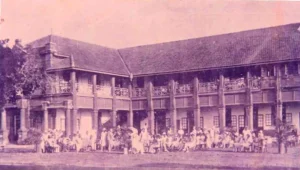
The Hostel was started in 1874, when Methodist College was still very “young”, that the Hostel was started. In 1883, when Miss Scott, founder and first Principal, left the school, there were thirty-two boarders.
Ms. Choate realised that the boarding accommodation was inadequate to meet the increasing demands made by the growth of the school and so, a Hostel Building Fund The Office and Hostel Block was begun in 1919. In 1920 the Women’s Auxiliary of the Methodist Missionary Society in England made a grant for the proposed Hostel building, and the foundation stone was laid in March 1921. But this was only the beginning, as more money had to be collected locally through appeals made to Old Girls and friends of the school. The Old Girls promptly rallied round the Principal, presenting her with a cheque for Rs. 1890/-. The architect in charge was Mr. William Claessen. The building of a new Hostel was a dream begun by the Rev. Rigby, for which he worked hard but never saw the fulfilment of. His successor, the Rev. Restarick continued in his predecessor’s path and gave great encouragement to the building of the new Hostel.
At last, in January 1922, the dream became a reality and the new Hostel was officially opened by Sir Graeme and Lady Thompson. At this ceremony there were ladies officially representing the Methodist Mission, the various communities, the past principals, the staff and students of the school, and of course the students were present. In May of the same year, the boarders went into occupation of their new building, which was spacious, and full of air and light. How proud they were!
The first Matron to be appointed was Miss Keegel, a strict disciplinarian, but remembered with affection by her charges. Through the years that followed, other “Hostel Mothers” – Mrs. Kelaart, Miss Modder, Mrs. Don, Miss Baines, to name a few – continued to inspire both affection and respect. As the numbers in the Hostel increased, and duties became more varied and onerous, it became necessary to have two Matrons; in 1964, shortly before the School’s Centenary, the overall responsibility for the Hostel was placed in the hands of a Hostel Warden. The first to be appointed to this office was Miss Irene Lincoln. An establishment of this kind must have reliable and efficient minor staff – and there are many who have given long and devoted service to the school, notably Mary Nanayakkara and Martin.
During its long history, the Hostel has passed through crises of different kinds. In the later years of the 2nd World War, the Hostel had to be closed as the buildings were commandeered for military purposes. But as soon as they were released, accommodation for boarders was made available once again. In times of political tension and transport difficulties, it provided a haven for benighted students and teachers. In 1983, at the height of the communal disturbances, it became overnight a refugee camp, and to this day, is a safe space for many young Methoites.
Religious Education
Christianity was taught to Christian students in every class from the early years and since 1970, Buddhism, Hinduism, and Islam were taught as subjects in Grade 9 to Buddhist, Hindu and Muslim students. The Student Christian Movement was active right throughout this period. Devotional meetings, talks and discussions on selected topics formed the normal programs. These have helped to develop the personal lives of the girls. Besides these the SCM also conducted residential camps for its members. In these camps there were talks and discussions on selected topics, such as women’s role in a changing society, Christian responsibility to the poor and the suffering. These widened the thinking and knowledge of the girls. The education imparted through devotional meetings and camps led the girls to go out and help the needy. One such example was their activities to help the Hudson Road Tamil School. On a number of occasions, the SCM girls visited these children and helped them in their lessons, and distributed books, shoes, uniforms and stationery to them.
The SCM also involved itself in a number of relief activities after the communal clashes in 1977 and the Black July of 1983. They visited quite a number of college families affected by these clashes, offered prayers and comforted them in their time of need. The SCM has always helped the girls to grow up in spiritual stature and be of service, to the church as well as society, even conducting regular Bible studies and outreach programmes.
Besides the SCM, there were the Buddhist, Hindu and Islamic Associations, which conducted meetings separately. These have helped the girls to a better understanding of the teachings of their religion. All these societies have gone a long way to develop the personality of the girls, and also worked together in times of national crisis to jointly helped those affected by floods from time to time. They have extended these activities to the south, as well as to Batticaloa and Kalmunai.
Onwards Through Strife, Onwards Through Change
By 1922, the School appointed students as prefects and, in 1930, the House system was introduced. Both these new ventures were begun with the aim of giving the students responsibilities in the trend towards making them responsible citizens. Financial problems faced by the Methodist Missionary Society in the United Kingdom had their repercussions on M. C. – in 1934, the grant was cut by 10 percent. Regardless, the school carried on by making economies in its budget and, by 1935 the School became self-supporting.
Miss. Park’s foresight again anticipated the recommendations of educationists decades later, when in 1940 she was instrumental in the formation of the Parent Teacher Association (PTA). This brought together the involvement of parents and teachers in the welfare of the school. 1944 was another landmark when the first Sri Lankan Mrs. L. G. Loos, an old girl whose father was a Methodist Minister, became Principal, succeeding Miss Park.
In 1943, M. C. was recognized as a Collegiate School and Higher School Certificate and University Entrance classes were started. This was crowned by the teaching of Science in the upper classes. Miss Park and Mrs. Loos were responsible for introducing a comprehensive curriculum up to university level.
In this period of rapid development, the 2nd World War intervened and coincided with political changes in the country. In February 1942, the College had to be closed because of the fear of air raids. Evacuation was discussed, but the idea dropped. In May 1942, the day school did reopen, but the Hostel was occupied by the Navy, with the British Royal Navy Office having been set up in school. Around 3 to 4 grades shared one class room as there were only 40 to 50 students who remained in Colombo. The school garden soon had vegetable plots where the students learned to cultivate and grow their own food. Simple entertainment came from air raid practices and putting on plays in Scott Hall. It was only in 1946 that the Hostel was released, and the College went into full session with 800 pupils.
As Ceylon gained independence from British rule, M. C. could also say that the College too came into its own, when it was represented at the State Opening of Parliament, after the grant of Dominion status. As the fifties dawned, M. C. faced momentous decisions. In 1951, she entered the Free Education scheme as an assisted school. In this year the College was raised to A grade status, and Miss Grace Robins took over as Principal on the retirement of Mrs. Loos. These were years of further expansion and around this time Framjee House on Station road was bought.
As the fifties closed, the country was passing through a transitional period of political, economic, social, communal and religious transition. Far-reaching educational changes were being introduced. The College’s Governing Board decided in 1961 that it should become a non fee-levying Private School. State assistance was no longer available, but amidst all these tensions, the College carried on.
In 1966, the M. C. Education Society was formed with Parents, Teachers, Old Girls and Friends. The School faced a formidable task of raising funds to pay the Staff and maintain itself as State grants were not available. Financially, these were difficult years; besides, the education system itself was undergoing diverse changes and the education authorities were making heavy demands on the school. The tradition of high standards had to be maintained, competent and trained teachers had to be engaged and adequate salaries paid. Teaching in the University Entrance classes had to be of a high order, and teachers had to be found for all three language streams. All this could hardly be done on meagre facilities fees. The numbers had now risen to 1040. Miss Robins at the helm took all this in her stride. She faced the magnitude of the task with fortitude and ensured that standards were maintained and that the large portfolio of co-curricular activities was not curtailed.
In these years there was a tremendous demand for Science, and the Science Department developed greatly under the able guidance of Mrs. V. S. D. Satthianadhan. There was no proper laboratory, and the girls had to commute by bus and train to Technical College and Wesley College, and later to Bishop’s College for their practicals. Despite this, in the first year, 16 girls entered the University. The demand for Science teaching was so great that one Principal was constrained to say that students would rather fail having taken up Science subjects than pass in Arts! Slowly, the laboratories grew out of next to nothing. A leading firm donated secondhand acid proof sinks, and apertures were cut in the tables to sink the sinks!
We Persevere, We Thrive, Despite The Odds!
Throughout these years, great emphasis was also placed on activities outside the curriculum. Games and athletics continued with undiminished vigour, and M. C.’s teams took part in national Netball tournaments, winning the Westrop and Nugawela Shields. Other sports and extra curricular activities in the school were Tennis, Table Tennis, Swimming, Music, Singing, Elocution, Dancing and the like. Inter-school debates, oratorical contests, general knowledge and quiz competitions – all these completed the many facets of school life.
As the Centenary year 1966 approached, M. C. could well boast that it was a fully fledged collegiate Grade A Secondary School with a wide-ranging academic curriculum and a cluster of co-curricular activities. True to the spirit of Methodism, the Centenary was celebrated on a modest scale with a Thanksgiving Service, a Birthday Party, an Anniversary Fete and Dinner. In 1968, Mrs. Shanti Peiris was appointed Principal, during which time M. C. saw an unprecedented blossoming both in school activities and in the expansion of the building complex.
In the period between 1964 and 1989 there were several policy changes in the educational system. Among these were –
- The closing down of the English stream
- Introduction of a shorter school day – from 7.30 a.m. to 1.30 p.m.
- The teaching of other religions
- Changes in the minimum age for admission
- A new scheme for University admission.
The Education Society determinedly campaigned for funds throughout these difficult years. Special mention must be made of Messrs. C. R. de Alwis and V. S. Nadarajan, the President and Hony. Secretary of the Society, for their invaluable services.
The new Science Block was opened in 1968, and the Loos Building which has 10 classrooms was completed in 1977. It is a tribute to the Education Society, OGA, the PTA, Staff and Pupils that this massive task was completed. With the shifting of classrooms to the new building, it was possible to provide the boarders with a Reading Room and Library and an extra Staff Room.
By 1970, there were 1200 students on roll with 80 boarders. The school could not escape the political turmoil and unrest which wracked the country in 1971, and M. C. had to close from April to June of that year, when the situation improved. However, during this break, the older children were not allowed to remain completely idle, because the teachers sent them assignments by post, foreshadowing the online assignments that students would have to complete during the COVID-19 pandemic that would come some 50 years later!
From 1976 onwards, M. C. launched its biggest building effort – building new classrooms and the Auditorium. The Building Fund was established and a campaign was launched to collect contributions in Sri Lanka and abroad. Parents, Old Girls, Teachers and Students never flagged in their efforts to raise money. Cards for contributions of Rs. 1,000 and Rs. 5,000 were distributed and there was a very good response, particularly from abroad. Special mention must be made of the efforts made by the OGA to collect funds for the Hall Building Fund.
In 1980, the school received a bonanza when the Government decided to pay the salaries of eligible teachers in private non-fee levying schools. By 1982, M. C. and the Hall Building Fund were confident enough to start its most ambitious project – the building of the Auditorium. However, by 1983, the communal riots were to disrupt this program. Several families of children in M. C. were affected and had to be helped. In addition to the setting up of a refugee camp in the school, a special refugee fund was set up and students took a leading part in distributing food, clothes and other requisites to those affected.
By 1985 the Education Society had completed 25 years of service, yet it had the same vigour and dedication. The Auditorium was coming up fast, and in 1985 M. C. was able to hold its Prize Giving in the Auditorium, though it was still incomplete. In 1985, a counselling service was also begun. Its aim was to help students, teachers and even parents to think positively on day to day issues and thereby to relieve the stress and strain that crept into their lives through various problematic situations.
In 1986 the school celebrated its 120th Anniversary. In keeping with the ethos of the school, the celebrations were on a modest and unostentatious scale. There was a Birthday Service, followed by an entertainment and gymnastics display by the pupils, after which all were entertained at a party. An Exhibition of Science and Needlework was also held.
The Auditorium was declared open on June 24, 1988 by the Rev. Harold Fernando, President of the Methodist Conference. On the same day, the foundation stone was laid by Mrs. Marbit Gunasekera for a four-storeyed block of classrooms and staff rooms. For this building, a grant of £ 40,000 sterling was received from the Methodist Church Overseas Division in Britain. With the completion of the Auditorium, M.C. has been able to hold Prize Givings, entertainments and other activities in comfort, even having been refurbished since. It has seating for 700+ three green rooms and other facilities.
By 1990, the four-storeyed block of classrooms was completed, enabling the school to accommodate the 1780 children who were then on its roll. The New Block had 15 classrooms, two spacious Staff Rooms, a Home Science laboratory and Vice Principal’s office.
At the end of the 125th anniversary year in 1991, Mrs. Peiris retired after serving as Principal for 23 years. Mrs. Priyani Fernando took over in 1992 and began an ambitious program to refurbish Framjee house and build an extension to it. This was completed in 1998 under the able supervision of architect Channa Daswatte. Mrs. Priyani Fernando also introduced Cricket to the school and the girls did well to be placed at all island level. She solicited funds from Old Girls to start a Wind instrument band for which the school loaned the students the brass and wood wind instruments. In her final year of office she also refurbished the office and hostel block.
In 2002, a computer literacy program was begun for students from Grade 6-9. Singapore Informatics Computer Institute supplied the syllabus. A goodwill mission to Jaffna participated by students of different religions and races widened their knowledge through seeing places of cultural interest and the sharing of experiences by them and students of Jaffna Peninsula.
On Mrs. Fernando’s retirement at the end of 2002, Mrs. Shanthi Dias took over as Principal in 2003. Under her tenure refurbishments to the Hall block and Park Hall blocks took place. A two storey block of classrooms with toilets and shower rooms at ground floor level was built adjoining Loos block and declared open by Mrs. Priyani Fernando in 2007. The 3 ground floor classrooms in the primary were demolished and a new building with two storeys to house the grade 4 classrooms, with a spacious staff room and open music room was built and declared open by Rev. Ebenezer Joseph in 2009.
The 1990 batch of Old girls donated a bus to the school in 2008. This was a tremendous help in transporting the students for the various after school extra-curricular activities held outside of the school. In July 2014, the school was made a fully private school, owned and managed by the Methodist Church of Sri Lanka with no state assistance. This enabled the school to start the Edexcel program in the A Level classrooms in 2015 May, and the first batch sat their exams in 2016.
The Methodist Church graciously leased 39 perches of the adjoining Epworth property to the school, including the old Nursery building. This was refurbished to house the Commerce block. To give impetus to basketball, a new sport added about 4 years previously, a Basketball court was laid out adjoining the Commerce block.
Amidst all development taking place in school, an unseen constant at the background of it all was the tense political situation in the country – during the Sri Lankan civil war from 1983 to 2009, especially during the years 1988-1989, the school faced a plethora of changes and challenges, including multiple school closures, including the time when the whole education system was halted in November 1995 till mid February 1996 due to bomb scares and threats.
However, the girls could count on their principals during this time – Mrs. Peiris, Mrs. P. Fernando and Mrs. S. Dias – to prioritise their wellbeing and safety, as they strove to provide the normalcy they needed through it all. Personnel from the Army were invited to speak to the students so that they would be aware of the dangers and be able to act wisely according to the particular situation. Dissemination of such knowledge was very relevant. During these years the college managed to maintain a high academic record. There were years when there were over 90% passes in the O’level examination and 80% passes in A Levels.
A similar tense political climate arose after the Easter bombings in April 2019, bringing bomb drills and heightened security measures once again, along with the daily checking of school bags for potential threats – a jarring scene to witness in a place of innocence and learning. Mrs. H. Fernando, as principal, did her best to ensure the safety of the students in all aspects, facilitating open and honest conversation amongst both staff and students, encouraging them to understand each other better to dispel the general sense of unease that had arisen in the country, and re-establish the safe and welcoming space that Methodist College has been for all.
Tackling the challenges that came with the 2020 global pandemic COVID-19 was no easy feat either, with lessons moving to online platforms and the entire staff and student body having to adapt to a new system rapidly. Methodist College took this, too, in her stride, as she has always done in the past… projects that seemed daunting soon became mundane tasks with each others’ support – from uploading an assignment, to conducting daily Zoom meetings or creating a video from scratch, all while solving internet issues in the process, there was much effort on the part of every member of the school family to adapt, improvise and step in for each other whenever help was needed.
Life At Framjee House
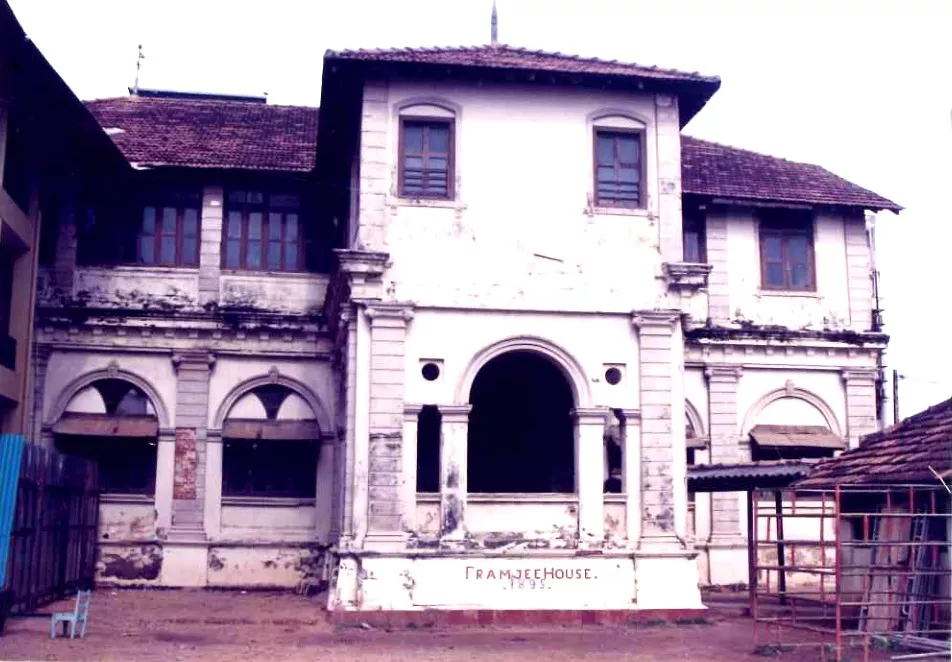
In the 1900s, with the growing numbers in school, the need for more space became urgent. At last, in 1950, further accommodation was acquired for Methodist College in the form of Framjee House… an old but solid and spacious building, and its surrounding compound. This was not exactly adjoining the school and Church premises, but situated along the Kollupitiya Station Road – and this made the move to the new location an exciting adventure.
It was the little ones of the Primary School who were the pioneers. This “break away” Section of the School had from the first an entity of its own, with Ms. Edith Ridge in charge. However it soon acquired a more dignified status, with its separate Headmistress, Mrs. S. Anandanayagam being the first of many.
As Framjee House had originally been a dwelling house, much adaptation was necessary to fit it for School use. Over the years, extra toilets were put in, part of the compound was enclosed to form additional classrooms, and a new block of classrooms was built. Further evidence of the growth and maturing of this Section of the school has been seen over the years – the Headmistress having her own sanctum, as well as the construction of a two-storey Grade 4 block, the ground floor of which is shared by the Music Room and an enlarged staff room, and even a little stage for morning assembly and little performances.
Though play-space is limited, over the years the children have had climbing frames, see-saws and a matslide, which was presented to the School by Miss. H. Ondaatjie, a former teacher, on which to work off some of their energy. The Primary had its separate Tuck-Shop arrangements, selling short eats, drinks and bites during the interval, but there is no denying that Aunty Prema’s piping hot patties and rolls beat every other snack – it was truly a break-time staple, and a core memory of many little Methoites.
Today, the Primary has its own Inter-House Competitions in Speech, Solo Singing and Group Singing, and its own cadre of prefects, who early learn the lessons of duty and discipline. The children of the 1st and 2nd year classes – earlier “babies” in coloured frocks – now wear the regulation school uniform. Yet this section of the School, though housed in a separate location, remains very much one with the rest of the School, and many students look back to their years in “Framjee House” as a happy and fruitful beginning of their school career.
So the wheel has now come full circle, when from its small beginnings, its difficulties, Methodist College has stood steadfast, self-sufficient, proud of her achievements and outstanding, but with enlightenment and humility, as one of the pre-eminent schools for girls in the country.